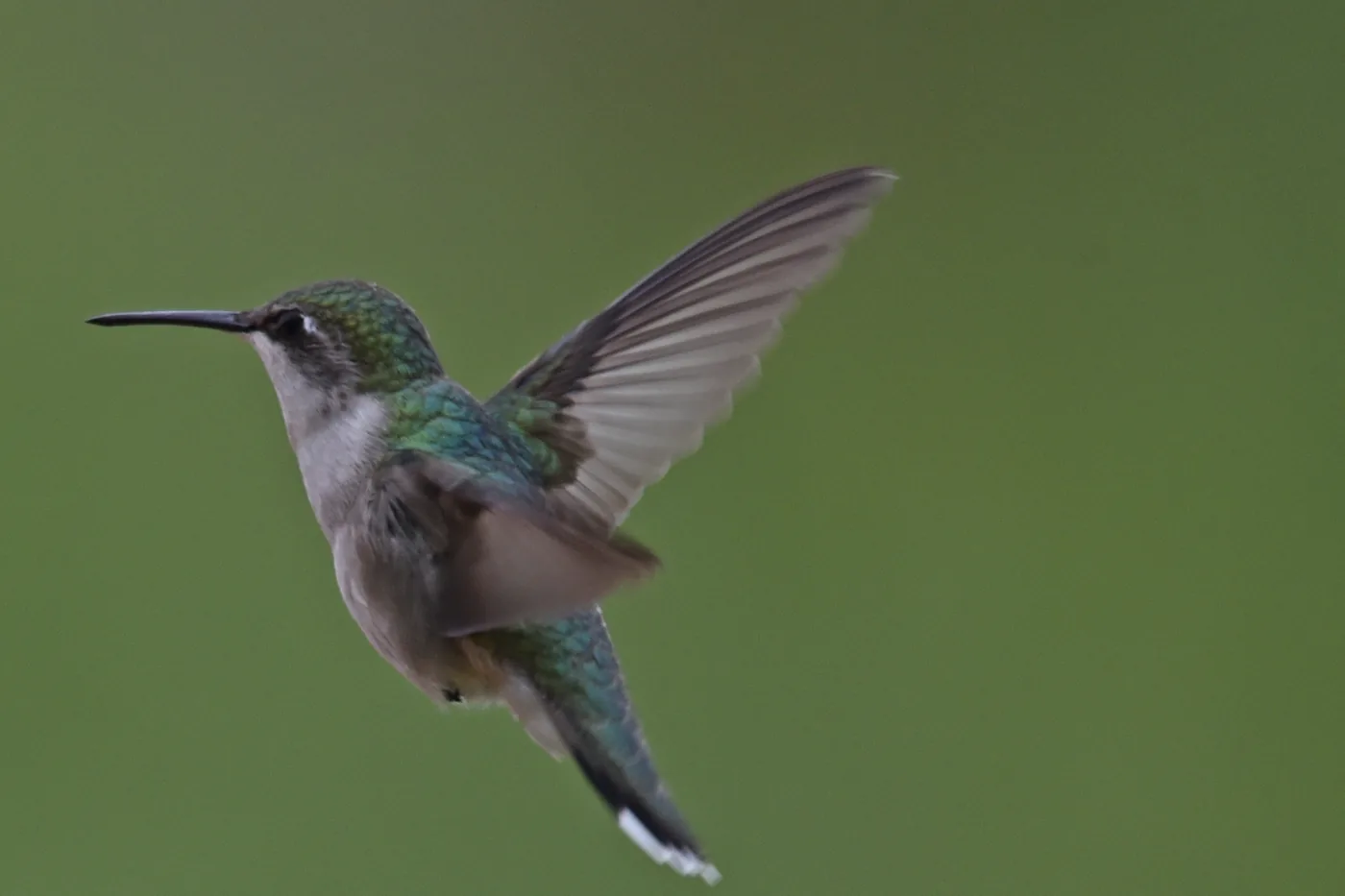
The only hummingbird that breeds in New Jersey. Three grams of muscle and iridescence that crosses the Gulf of Mexico without landing, then spends the summer in our gardens.
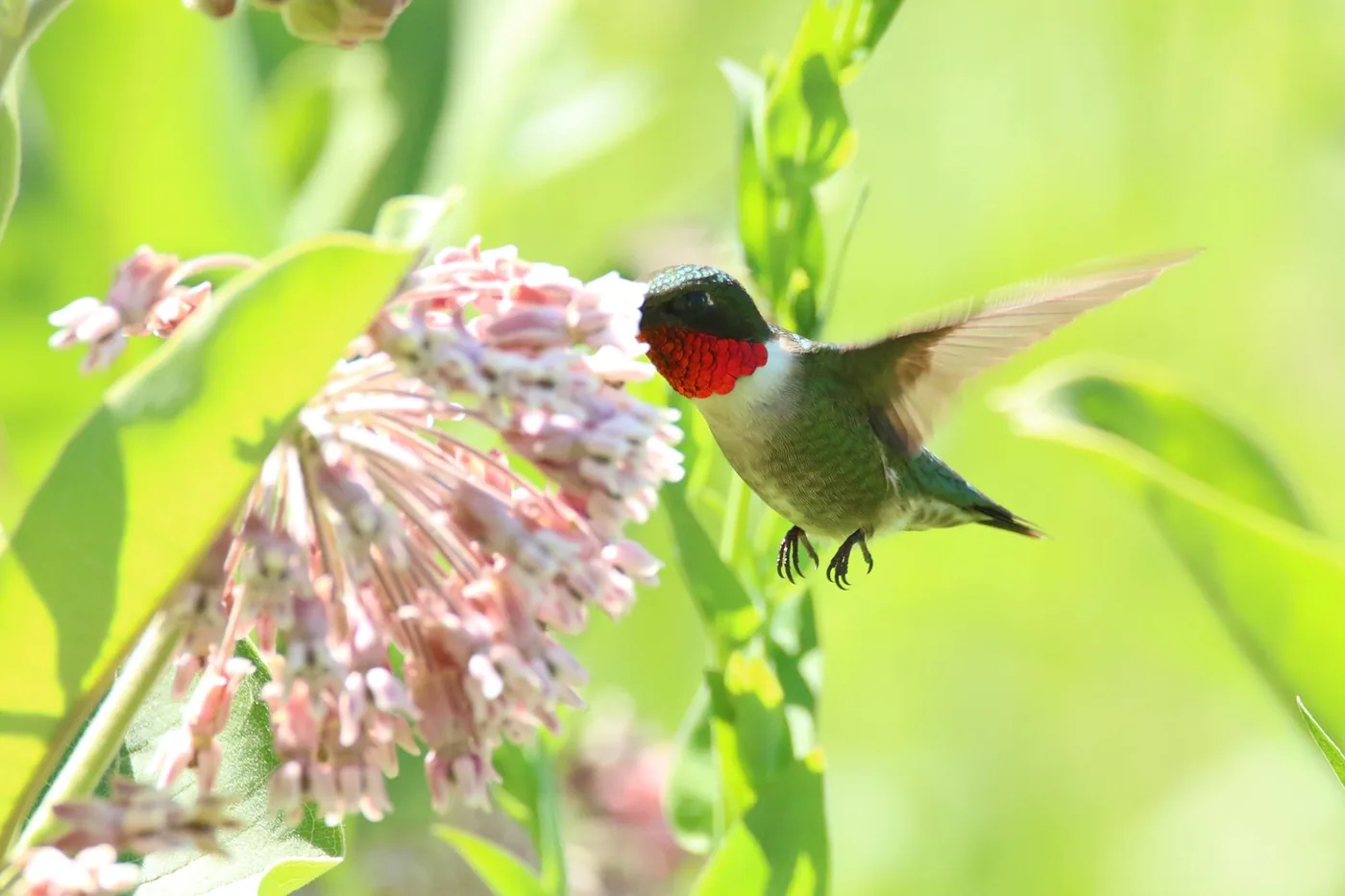
Archilochus colubris
Bees cannot see red. Hummingbirds key on it. That single fact makes the hummingbird garden a different plant list from the bee garden.
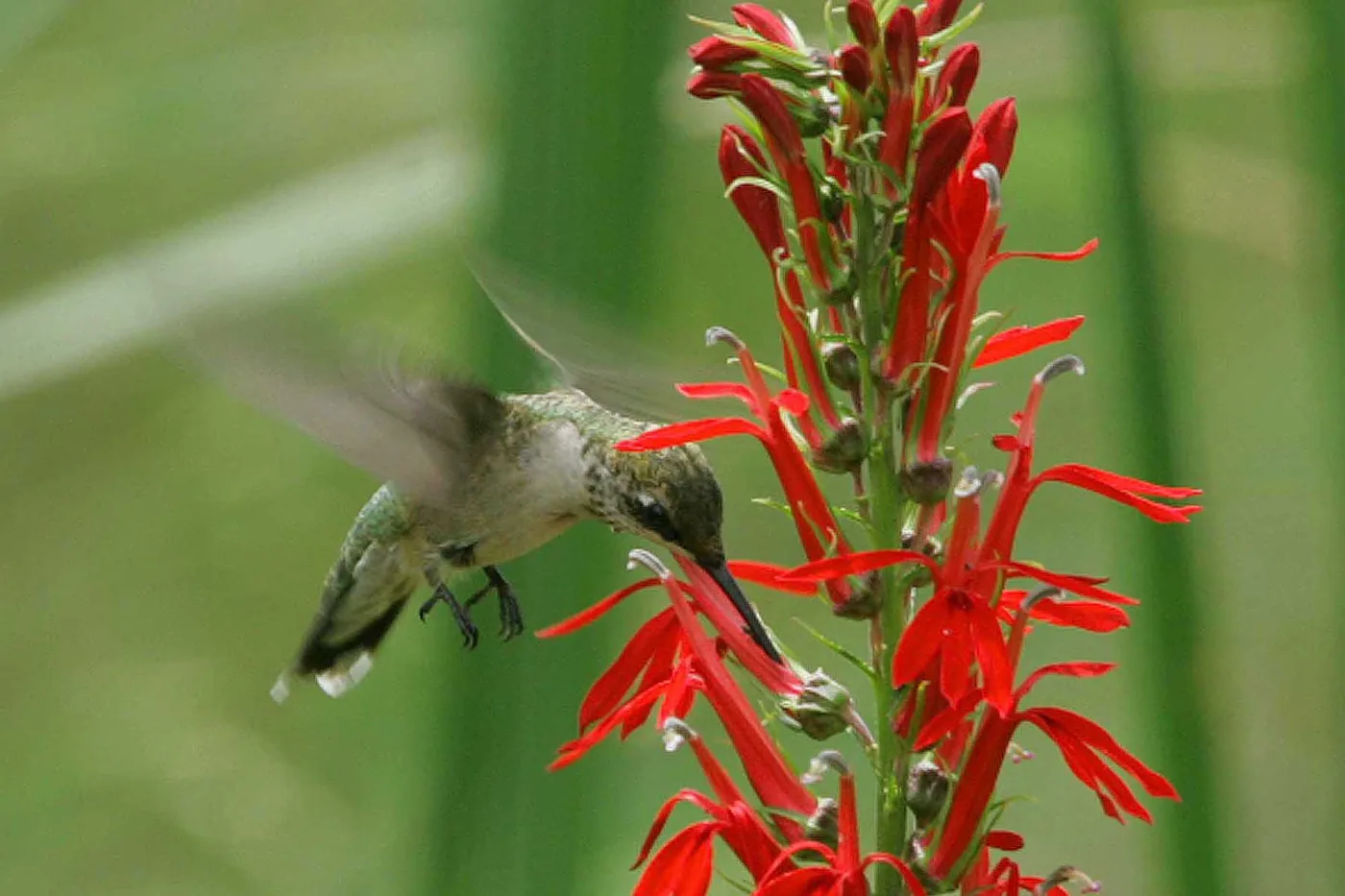
A hummingbird runs so hot it lives meal to meal. It feeds every ten to fifteen minutes through the day and can visit well over a thousand flowers doing it, favoring exactly the blooms most insects skip: long red tubes like cardinal flower and coral honeysuckle, shaped so that a hovering bird with a long bill gets the nectar and carries the pollen. Flowers do not bother advertising in a color their pollinators cannot see, which is why so many of them went red for the birds.
Nectar is the fuel, not the whole diet. Small insects and spiders supply the protein, which is one more reason a sprayed yard is an empty yard, whatever is blooming in it.
The nest is the size of a thimble, built of plant down lashed together with spider silk and shingled with lichen. The silk lets it stretch as the two chicks grow. Most people have stood within feet of one and never known it.
| Weight | About 3 grams |
| Diet | Nectar, plus small insects |
| Feeding pace | Every 10 to 15 minutes |
| Built for | Red tubular flowers |
| Nest | Thimble-sized, stretches as chicks grow |
New Jersey to Central America and back
The hardest thing any three-gram animal does: the Gulf of Mexico in one flight.
Ruby-throats winter from southern Mexico down to Panama. Many of them get there by flying straight across the Gulf of Mexico, roughly five hundred miles of open water with nowhere to land, around twenty hours of continuous flight. To survive it, a bird nearly doubles its body weight in the weeks before, built almost entirely on nectar. Every late-summer flower in a South Jersey yard is part of that fuel load.
They return to us in May, males first, and nest through the summer. By late September they are gone again.
The honest picture on their numbers: survey counts rose for decades, but since the mid-2000s counts across much of the East have slipped, New Jersey included. Nobody calls it a crisis yet. Quiet slides like this are exactly how the loud ones start, and the fix is the same either way: flowers in bloom when the birds need them, and no poison on the plants.
| Winters in | Southern Mexico to Panama |
| Gulf crossing | ~500 miles, about 20 hours |
| Arrives here | May, males first |
| Departs | By late September |
| Trend since mid-2000s | Slipping across the East |
A hummingbird yard is not a bee yard with a feeder in it. The birds key on red tubular flowers that most insects skip, and they need the food to run from their arrival in May through the September fattening for the Gulf.
Every plant here is native to our region and shaped for a hovering bird with a long bill. Together they cover the whole season, from the first males in May to the last stragglers heading south.
| Plant | Blooms | What it does |
|---|---|---|
| Wild columbineAquilegia canadensis | April to June | First fuel for the May arrivals |
| Coral honeysuckleLonicera sempervirens | May to summer | A vine for fence or trellis, blooming as the birds return |
| Scarlet bee balmMonarda didyma | June to August | Midsummer mainstay |
| Trumpet creeperCampsis radicans | July to September | Big orange trumpets. Give it room, it is vigorous |
| Cardinal flowerLobelia cardinalis | July to September | The best hummingbird plant we can grow. Likes damp ground |
| JewelweedImpatiens capensis | July to frost | Wild fall fuel along wet edges for the trip south |
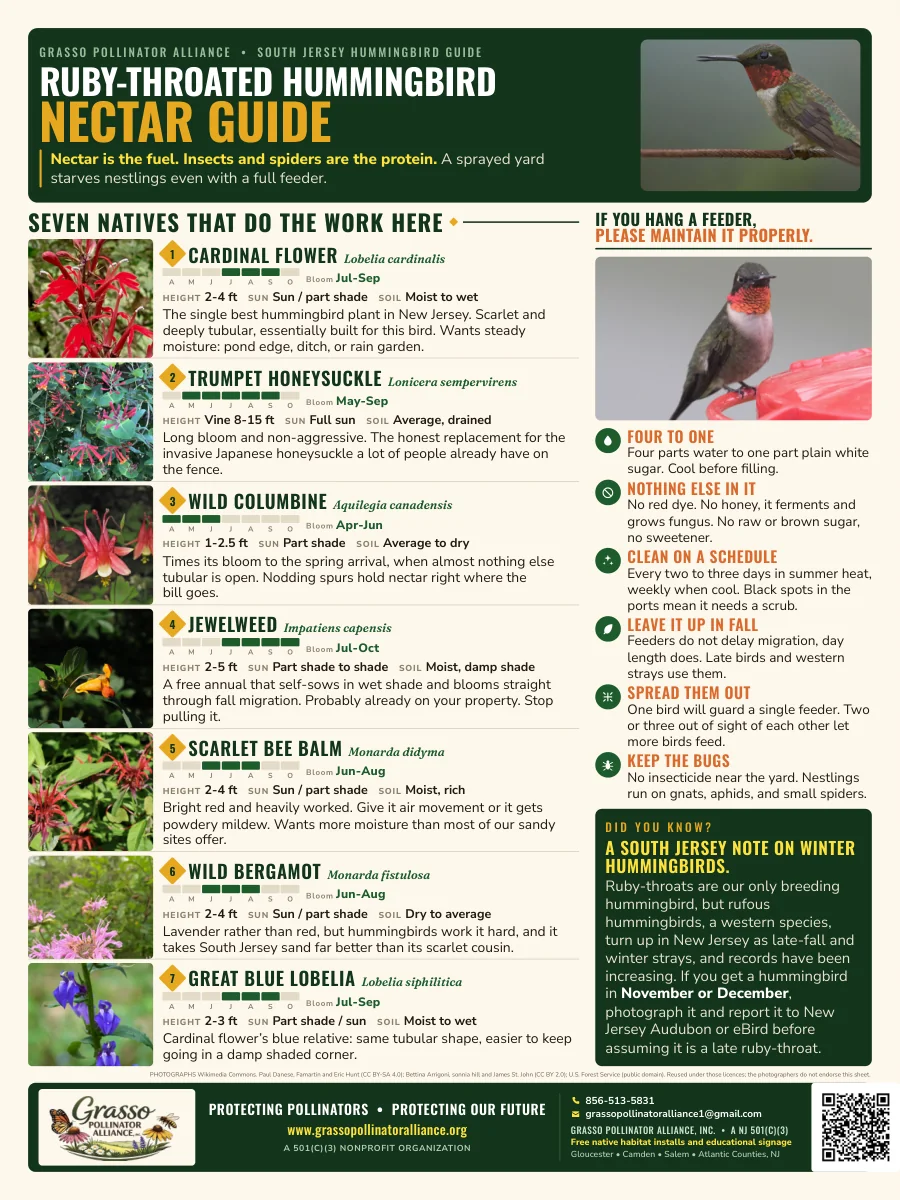
Seven native plants that feed ruby-throated hummingbirds, with feeder rules and a South Jersey winter note. Tap the poster to view it full size, or download the PDF.
Every cardinal flower and coral honeysuckle we plant is a fuel stop on a three-thousand-mile round trip. Help us plant more.
Donate Now